
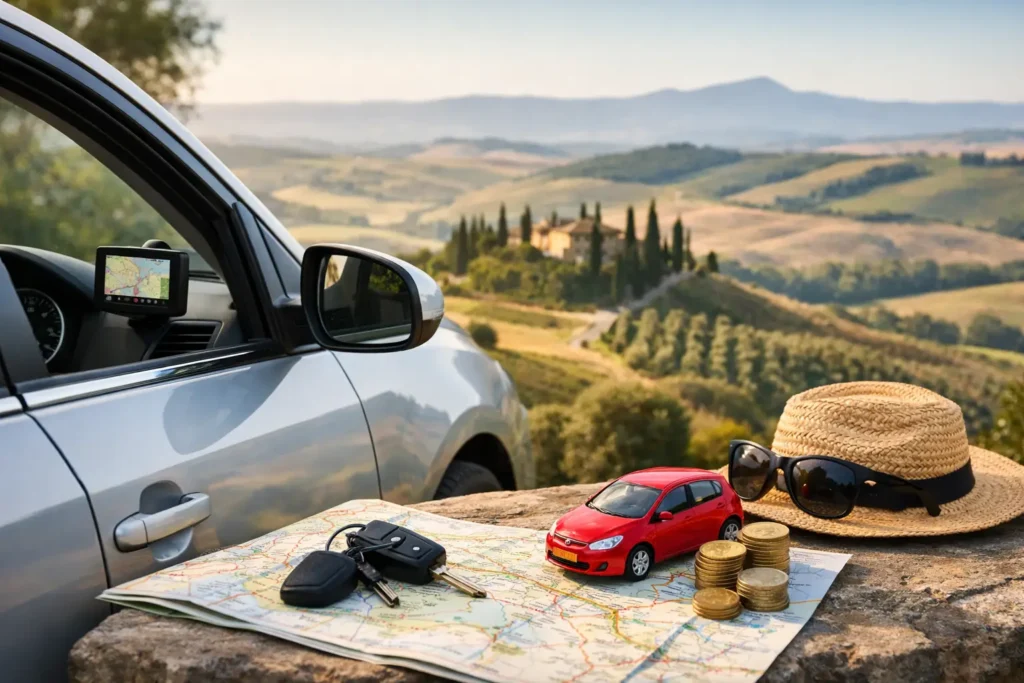
Landing in Rome and finding the cheapest headline rate is easy. Real value in Italy car rental comes from choosing the right car, the right pick-up point and the right cover before you travel. Get those three things right and your trip is simpler, cheaper and far less stressful.
Why Italy car rental can save you time and money
Italy looks compact on a map, but travelling between airports, hill towns, beaches and rural stays can take longer than many people expect. Trains are excellent on major routes, yet they do not always help if you are staying in the countryside, heading to smaller towns or travelling with children, luggage or sports gear.
That is where a hire car often makes better sense. It gives you control over your schedule, avoids repeated taxi costs and makes multi-stop trips much easier. For families and couples splitting the cost, Italy car rental can work out better value than piecing together rail tickets, airport transfers and local transport.
It does depend on your route. If you are staying only in central Rome, Florence or Milan, a car may be more hassle than help. Parking can be expensive, traffic is busy and many historic centres restrict access. But if your plan includes Tuscany, Puglia, Sicily, Lake Garda, Sardinia or the Amalfi Coast beyond the main transport hubs, a rental car can be the practical option.
How to find the right Italy car rental deal
The cheapest daily rate is not always the cheapest booking. A better approach is to compare the full cost across trusted suppliers and look closely at what is included.
Start with the basics: pick-up location, car size, fuel policy, mileage, deposit and cover. An airport collection can be convenient, but it is not always the lowest-priced option. In some cities, an off-airport branch may cost less. On the other hand, if you need taxis to get there, the saving can quickly disappear.
Vehicle size matters more in Italy than in some other destinations. A compact car is often the best-value choice because many streets are narrow, parking spaces are tight and fuel costs can add up over a longer trip. If you are planning mountain drives or carrying several large cases, moving up one category may still be worth it. The key is not paying for more car than you need.
Booking early usually gives you the widest choice and the best chance of lower prices, especially for summer holidays, school breaks and popular islands. Last-minute bookings can work in quieter periods, but availability becomes tighter and that often pushes up rates.
Using a comparison platform makes this faster because you can see different suppliers, car types and conditions in one place rather than checking each brand separately. For many travellers, that is the simplest way to book online and keep costs under control.
What catches drivers out in Italy
Limited traffic zones and city centres
Many Italian towns and cities use restricted traffic areas, often called ZTL zones. If you drive into one without permission, you may receive a fine later. This is one of the biggest reasons city-only travellers are usually better off without a car.
If you do need a car near a city, choose accommodation with parking and check the route before you arrive. Do not assume sat nav directions will protect you from restrictions.
Manual cars are more common
Manual vehicles are widely available and often cheaper. Automatic cars can cost more and may book out faster, particularly in peak season. If you need an automatic, reserve early.
Deposits and payment rules vary
Not every deal works the same way. Some suppliers require a credit card in the main driver’s name for the security deposit. Debit cards may not always be accepted. This is worth checking before you book, because a low rate is no bargain if you cannot collect the car.
Insurance confusion
This is where costs can rise quickly. Basic cover may leave you with a high excess, and extra products sold at the desk can be expensive. It is sensible to understand your cover before arrival so you are not making a rushed decision after a flight.
Choosing the best car for your trip
Italy car rental by trip type
A city break with a day trip needs something different from a two-week family holiday. Matching the car to the trip helps avoid waste.
For couples travelling through Tuscany or Umbria, a small hatchback is usually the sweet spot. It is easier to park, simpler on country lanes and more economical on fuel. For families doing a beach holiday in Sardinia, Sicily or Puglia, luggage space matters more, so an estate or compact SUV may be worth the upgrade.
If you are heading into mountain areas or travelling in winter, check whether local conditions call for winter tyres or chains. You may not need a large vehicle, but you do need the right equipment. If your route is mainly motorway and bigger towns, the smallest category available may be all you need.
There is also a comfort factor. A very cheap mini car can be ideal for short journeys, but less pleasant for long motorway runs with four adults and bags. Saving money matters, but so does arriving in a good mood.
When to book and where to collect
Peak-season Italy is competitive. July and August are busy, as are Easter, half-term periods and major holiday weekends. Prices tend to rise as availability drops, especially at airports serving leisure routes.
If your dates are fixed, book as soon as your flights are confirmed. This is particularly useful if you need an automatic, a larger family vehicle or island collection. Smaller airports and resort destinations often have less flexibility than major city locations.
Collection point can shape both price and convenience. Airport pick-up suits late arrivals, early departures and travellers carrying lots of luggage. City branches may save money if you are spending the first few days in town without needing the car. A split plan often works well: use public transport in the city, then collect the car when you leave.
How to avoid paying more than you should
A low headline rate can become an expensive booking once extras are added. The best way to keep Italy car rental affordable is to think about total cost, not just daily price.
Fuel policy is one example. Full-to-full is often the clearest option because you return the car with the same fuel level. Additional drivers, child seats and cross-border permission can all increase the bill, so only add what you genuinely need.
Watch the mileage policy too. Unlimited mileage is useful for longer road trips, while capped mileage may still be fine for a short regional stay. If your itinerary includes several long drives, paying slightly more upfront can save money later.
It also helps to inspect the car properly at collection. Note existing damage, take photos and make sure anything visible is recorded. That takes a few minutes and can prevent disputes when you return the vehicle.
Driving in Italy without surprises
Italian roads vary a lot by region. Motorways are generally straightforward, but tolls are common. Rural roads can be slower and narrower than expected, and coastal routes may be scenic but demanding in peak season.
Drive with patience rather than speed. Build extra time into your plans, especially if you are arriving in an unfamiliar town, collecting the car after dark or travelling on a Saturday in summer. If your accommodation is in a historic centre, confirm parking arrangements in advance instead of assuming you can stop outside.
Mobile signal, mapping apps and sat nav all help, but old town layouts can still be confusing. It is worth checking the final few miles before setting off so you know where to park and whether any restrictions apply.
Is Italy car rental worth it?
For the right trip, yes. If you want freedom, easier luggage handling and access to places trains do not reach well, a car can make your holiday smoother and sometimes cheaper overall. If you are sticking to major cities, it may be smarter to skip it.
The best bookings come from comparing suppliers carefully, choosing a sensible vehicle size and understanding the terms before you travel. That is exactly why many travellers use a comparison service such as easyRentacar – it cuts down the searching, helps you compare prices clearly and makes it easier to book a car that fits both your route and your budget.
Italy rewards flexible travel, but only if the car works for the journey you are actually taking. Book with a clear plan, keep an eye on the full cost, and you will give yourself a much easier start the moment you collect the keys.