
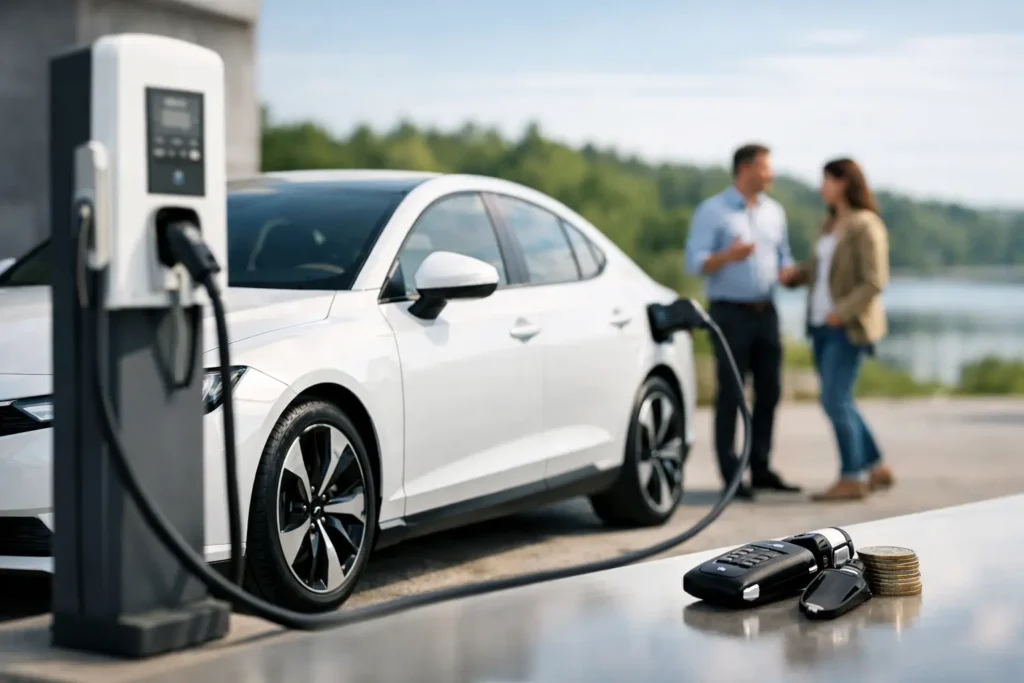
An electric hire car can make a weekend away feel noticeably cheaper at the pump – because there is no pump. But it is not automatically the best-value choice for every journey. This electric car hire review looks at the details that matter before you book: the real cost, charging access, range, collection rules and whether an EV fits the way you plan to travel.
For many UK breaks and city-based holidays, electric car hire is a practical, comfortable option. For a long driving holiday through unfamiliar areas, it can still work well, but only with a little more planning. The best choice depends less on the badge on the bonnet and more on where you are staying, how far you are driving and when you need to arrive.
Electric car hire review: the short answer
Hiring an electric car is often worth it when your accommodation has charging, your daily mileage is moderate or your journey includes towns and cities with good public charging coverage. EVs are quiet, easy to drive and can cost less to recharge than a petrol or diesel car costs to refuel.
The trade-off is time and certainty. A conventional car can be refuelled almost anywhere in a few minutes. With an EV, charging points may be busy, unavailable or require a separate app or payment method. Fast chargers can reduce the wait considerably, but they are not always where you need them.
That does not mean electric hire is difficult. It means the cheapest-looking rental rate is only one part of the decision. Check the charging arrangements before booking, rather than treating them as an afterthought at collection.
What you get with an electric rental car
Most electric rental cars are automatic and deliver smooth, responsive acceleration. They are especially pleasant in stop-start traffic, on airport runs and around busy holiday destinations. There is no clutch, no engine vibration and often no need to visit a filling station during a short stay.
The vehicle category shown at booking matters. A listing may describe an electric vehicle or similar, which means the specific make and model can vary according to availability. Look at the number of seats, luggage capacity and stated vehicle type, rather than choosing solely from the picture. A compact EV can be ideal for two people travelling light, while a family of four with pushchairs and large cases may need a larger electric SUV or estate-style vehicle where available.
Range also changes by model, weather, road speed and driving style. Cold conditions, motorway driving, heavy loads and cabin heating can all reduce the distance available between charges. A figure advertised by the manufacturer is useful for comparison, but it should not be treated as a promise for your exact route.
Costs: compare the full trip, not just the daily rate
Electric car hire can be excellent value, particularly when charging is included at your hotel, holiday cottage or workplace. Even when you pay at public chargers, electricity may cost less than petrol or diesel for the same distance. Prices differ widely, however, and rapid chargers usually cost more than slower destination charging.
Before booking, compare the total rental price and check what is included. Consider the rental rate, any one-way charge, insurance excess, additional driver fees, child seats and any location-specific costs. If you expect to cover a lot of motorway miles, estimate your public charging spend too.
The return policy deserves close attention. Rental suppliers commonly require electric vehicles to be returned with a minimum battery level or at the same level stated in the rental agreement. Returning the car with very little charge may result in a recharge service fee, which can be more expensive than topping up yourself. Ask at collection what battery percentage is expected and whether the vehicle comes with a charging cable or charge card.
Insurance is another area where comparing can save money. The basic rental price may include cover with an excess, meaning you could still be liable for an amount if the car is damaged or stolen. Read the terms carefully and consider whether separate excess protection suits your trip and budget. The aim is not simply to choose the lowest headline price, but to avoid a costly surprise later.
Charging on holiday: the part to plan first
The simplest electric car hire experience starts with an overnight charger. If you are staying at a hotel, block of flats, campsite or holiday home, ask whether guests can use the charger, whether it must be booked and what it costs. A slow overnight charge can be more convenient than stopping at a rapid charger during a day out.
If accommodation charging is not available, check charging points around the places you already plan to visit – such as supermarkets, town car parks, attractions or motorway service areas. Build charging into natural breaks for lunch, shopping or a coffee. This is generally easier than waiting until the battery is low and then searching for a suitable charger under pressure.
For international trips, charging networks and payment methods vary. Some chargers accept contactless payment, while others require a network app, account or RFID card. Mobile signal can also be unreliable in rural locations. Ask the rental desk whether the car includes access to a supplier charge card and whether any usage fees are added to your final bill.
Do not rely on a standard domestic extension lead unless the rental supplier explicitly confirms it is safe and permitted. Use the correct equipment supplied with the vehicle or an approved charging point. Charging safely is more important than trying to save a few pounds.
When an EV is the better hire choice
An electric car is particularly well suited to a city break, a stay near reliable charging and local exploring from one base. It can also be a smart choice for business travellers who need a comfortable automatic car for regular short journeys between meetings, airports and hotels.
It is less straightforward when you are landing late, immediately driving a long distance and staying somewhere without charging. The same applies to a tightly timed multi-stop road trip where every delay matters. In those cases, a hybrid, petrol or diesel rental may give you more flexibility, even if the fuel cost is higher.
Families should think about space as well as energy. Check the luggage allowance carefully, particularly if you need a buggy, travel cot or sports equipment. A larger vehicle may be worth the extra cost if it avoids an uncomfortable journey or the need to pack around a restricted boot.
Booking an electric hire car with confidence
Start by entering your dates and collection location, then compare electric vehicle options alongside hybrids and conventional cars. The best deal is not always the lowest daily price. Look at the rental supplier, fuel or battery return terms, mileage allowance, deposit requirements and cancellation conditions before you reserve.
Choose a collection point that works for your route. Airport locations can be convenient, but an in-town branch may be closer to your hotel and easier to return to. If you are collecting abroad, allow time at the desk to understand the charging cable, charging card, battery level and emergency contact process. Take photographs of the vehicle’s condition and dashboard battery level before leaving the car park.
At easyRentacar.com, comparing options from trusted suppliers can help you see which vehicle type and price work best for your plans without checking each provider separately. Once you have found a suitable EV, booking early can give you more choice, especially during school holidays and at busy airport locations.
A practical choice when the journey fits
Electric car hire is no longer only for travellers who already own an EV. For the right trip, it is a straightforward way to travel quietly, avoid fuel stops and keep running costs under control. Give the charging plan the same attention as the rental price, leave a sensible battery buffer and choose a car that matches your luggage and mileage. Then the car becomes part of an easier holiday, not another thing to organise.