
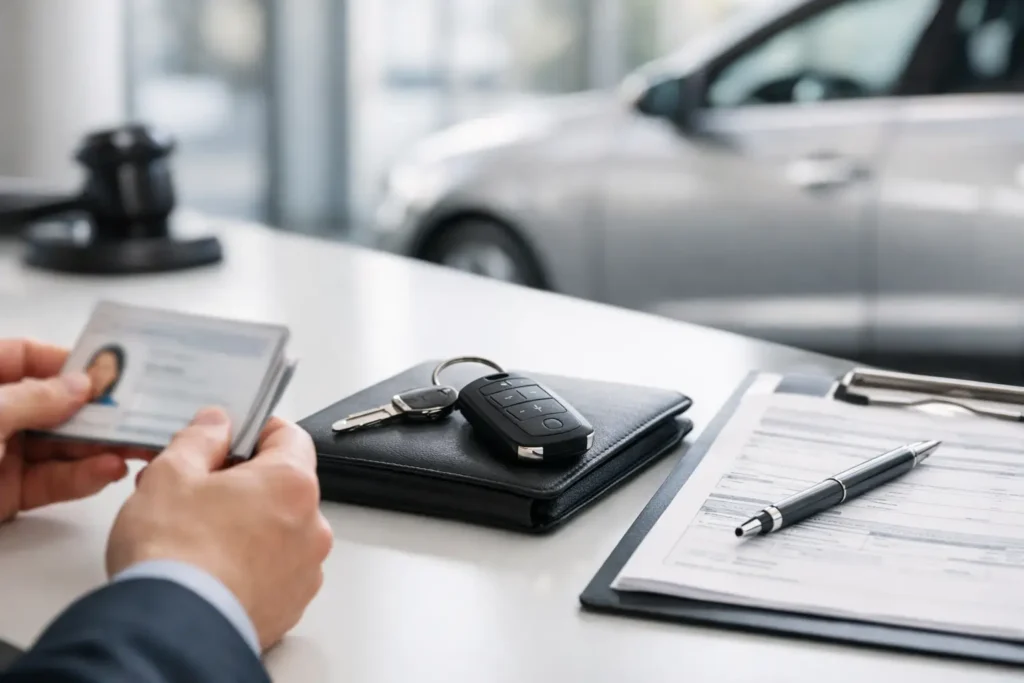
Turn up at the rental desk without the right paperwork and a cheap booking can quickly become an expensive problem. If you’re asking what documents do I need for car hire, the short answer is this: a valid driving licence, ID, a payment card, and sometimes a few extras depending on where you hire and which supplier you choose.
That simple answer helps, but car hire rules are not identical everywhere. The exact documents can vary by country, supplier, driver age and even the type of car you book. Knowing what to bring before you travel saves time, avoids stress at collection, and gives you a better chance of getting on the road without delays.
What documents do I need for car hire in most cases?
For most rentals, you will need four core things. First is your full valid driving licence. Second is identification, usually a passport. Third is the payment card used for the booking or the main driver’s card for the security deposit. Fourth is your booking confirmation or voucher.
In many cases, that is enough. But not always. Some suppliers also ask for proof of address, an International Driving Permit, or extra documents if your licence does not show your current address or uses a non-Latin alphabet.
This is why it pays to check the supplier’s terms before you fly, not when you are standing at the desk with bags, children and a queue behind you.
Your driving licence comes first
The most important document for car hire is your driving licence. It must be valid, in date, and accepted in the country where you are renting. A provisional licence will not do. Most suppliers also expect you to have held your licence for a minimum period, often one or two years, although this can vary.
If you are a GB licence holder, you will usually present your photocard driving licence. If you still have an older paper licence or your photocard is expired, that can cause problems. Even if your right to drive is still valid, rental suppliers often require a current physical licence document.
If your licence has endorsements or penalty points, that does not always mean you cannot hire a car. It depends on the supplier’s policy and the seriousness of the offence. Minor points may be accepted, while more serious convictions may not be.
Do I need a DVLA check code?
Sometimes, yes. Since the paper counterpart was withdrawn in Great Britain, some suppliers ask UK drivers for a DVLA check code so they can view the driving record. Others do not. Because policies differ, it is worth generating one before you travel if there is any chance you will need it.
A DVLA check code is time-limited, so do not get it too early. If your supplier asks for one, make sure it is still valid on the day you collect the car.
Do I need an International Driving Permit?
This depends on your destination and your licence. If you are hiring in some countries outside the UK, an International Driving Permit may be required alongside your normal driving licence. In other places, it may not be mandatory but can still make things easier, especially if your licence is not in a widely recognised format.
This matters most for travellers heading outside Europe, or for anyone hiring in a country with stricter local documentation rules. Always check the destination requirements and the rental supplier’s own terms, because one may be stricter than the other.
Passport or photo ID
A driving licence alone is often not enough to confirm identity. Most suppliers will also ask for a passport, especially for overseas rentals. If you are hiring in your home country, some may accept another government-issued photo ID, but passport is the safest option for international travel.
The name on your booking should match the name on your documents. Small differences can create unnecessary delays. If your booking is in the shortened version of your name but your passport shows the full version, it is worth checking in advance whether that will be accepted.
If you have recently changed your name, bring supporting evidence if needed. It is better to have one extra document than to risk a refused handover.
The payment card matters more than many people expect
A lot of drivers focus on licences and forget the card. Yet this is one of the main reasons rentals are refused at the desk. In many cases, the main driver must present a credit card in their own name for the security deposit.
That does not always mean you need a credit card to pay for the booking itself. Some suppliers accept debit cards for payment, and some accept debit cards for deposits too. But many still require a credit card for the hold placed at collection. This is especially common for higher-value vehicles, airport rentals and cross-border hires.
The card must usually have enough available funds to cover the excess or deposit amount. If the card limit is too low, the supplier may refuse the rental even if you have paid in advance.
Can someone else use their card for me?
Usually not for the main deposit. The lead driver generally needs to show a card in their own name. If your partner, friend or employer paid online, that may be fine for the booking, but the desk may still require the driver’s own card at collection.
This is one of those rules that feels frustrating until you are prepared for it. If you are travelling in a group, make sure the person whose name is on the rental agreement also has the right card.
Booking confirmation and travel documents
Bring your booking confirmation, voucher or reservation number. You may never need to print it, but having a digital and paper copy is a sensible backup. Mobile signal, flat batteries and airport Wi-Fi are not always reliable when you need them most.
If you booked through a comparison platform such as easyRentacar.com, your confirmation should clearly show the supplier, vehicle category, pick-up location and basic rental terms. Having that to hand makes collection quicker and helps if there is any confusion about what was booked.
For airport collections, it can also help to have your flight details available. Some suppliers ask for them in case your arrival is delayed.
Proof of address and extra ID checks
Some suppliers ask for proof of address in addition to photo ID. This is more common in certain countries, for local rentals, or where fraud checks are stricter. A recent utility bill, bank statement or council tax bill may be accepted, though many suppliers will not accept online screenshots.
The details matter here. Some require the document to be dated within the last three months. Some want a printed copy. Some do not ask for proof of address at all. Because this is inconsistent, it is one of the easiest documents to overlook.
If your driving licence does not show your current address, or if you have moved recently, bringing proof of address is a sensible precaution.
What documents do I need for car hire abroad?
When you hire abroad, the basics stay much the same, but the chance of needing extra paperwork goes up. You will almost always need your passport, driving licence and payment card. Depending on the country, you may also need an International Driving Permit, proof of onward travel, proof of address, or evidence that you are returning to your home country.
Cross-border travel adds another layer. If you plan to drive into another country during the rental, you may need written permission from the supplier and additional insurance documents. Never assume this is automatically included just because the countries are close together.
Age rules also vary more overseas. Younger drivers and older drivers may face extra checks, restricted vehicle categories or additional charges. The documents do not change much, but the terms around them often do.
A few situations where requirements can change
There is no single global rulebook for car hire. Luxury cars, larger vehicles and premium suppliers may have stricter card rules. Long rentals may trigger extra ID checks. One-way hires and cross-border bookings can require additional approval. Business travellers may also need to show company details if the booking is linked to corporate payment.
If there is an additional driver, they will usually need to be present at collection and show their own driving licence and ID. This catches people out more often than it should.
The safest approach is simple. Check the rental terms for your exact supplier, destination and driver profile before you travel. A low headline price only saves money if you can actually collect the car.
Before you leave for the rental desk
A quick document check can save a lot of hassle. Make sure your licence is valid and accepted, your passport is packed, your payment card meets the supplier’s rules, and your booking confirmation is easy to access. If there is any doubt, bring proof of address and check whether you need a DVLA code or International Driving Permit.
Car hire is usually straightforward when your paperwork is in order. Get the documents sorted before you travel, and the rest of the trip tends to feel much easier from the moment you collect the keys.